

Gybing a spinnaker is one of the most challenging and potentially dangerous maneuvers in downwind sailing. With proper coordination and technique, you can execute a safe and efficient gybe. This guide walks you through the process step by step.
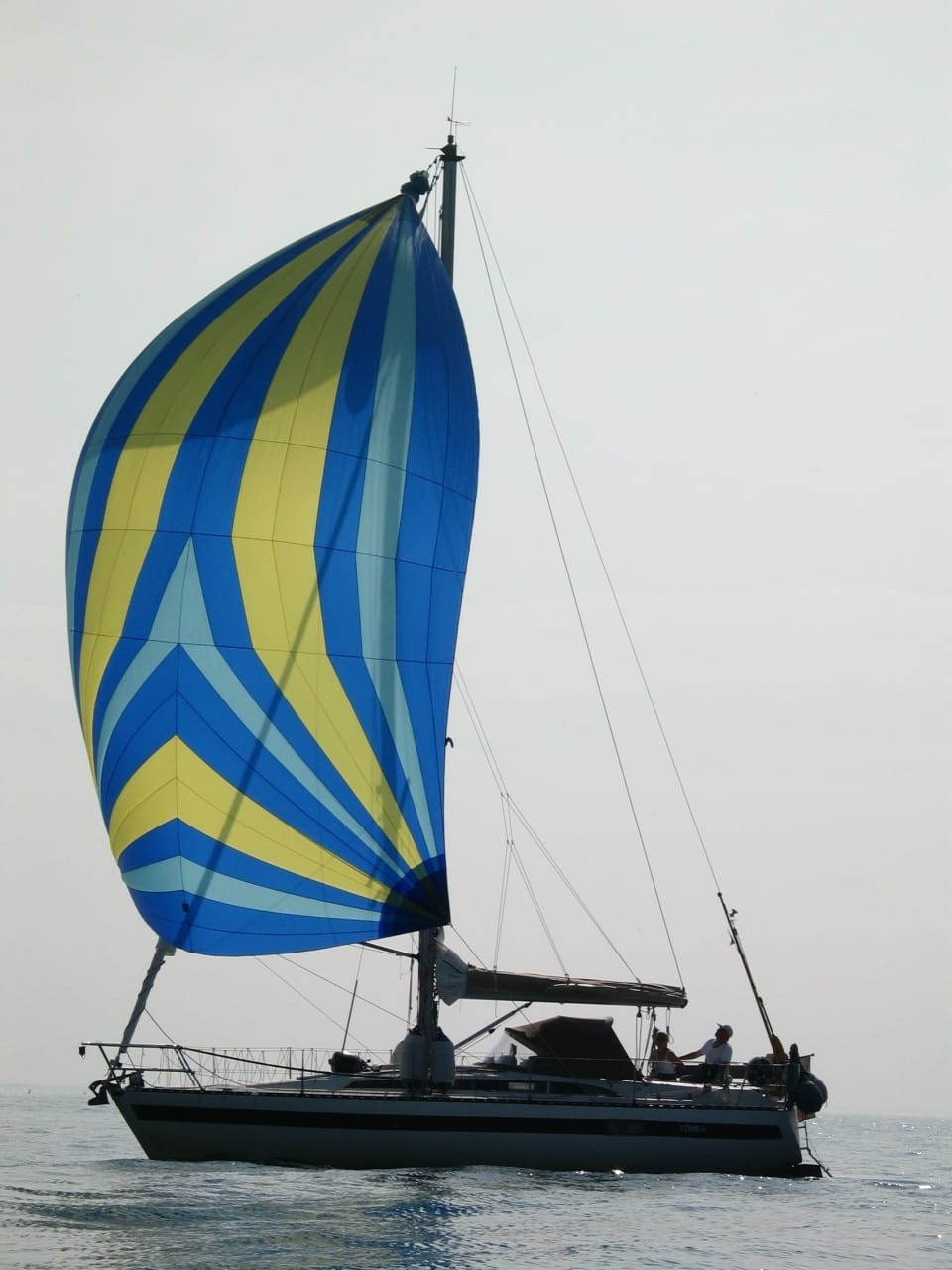
A sailboat flying a spinnaker – the focus of this gybing guide
Introduction
A spinnaker gybe (also called a “wing‑on‑wing” gybe when the spinnaker is flown opposite the mainsail) involves turning the boat so the wind shifts from one side to the other while the spinnaker is set. Unlike a jibe with a mainsail, a spinnaker gybe requires managing both the spinnaker pole (if used) and the two sheets, plus awareness of the risk of a wrap or accidental dip in the water. Practicing in light wind first is strongly recommended.
⚓ Expert Tip: Invest in quality once rather than replacing budget gear repeatedly. Marine-grade equipment costs more upfront but saves money and hassle long-term.
Before the Gybe: Preparation
- Crew briefing: Ensure everyone knows their roles – typically two on the spinnaker (pole crew and sheet crew) plus the helmsperson.
- Clear the deck: Stow any loose gear that could get tangled.
- Check wind and waves: Avoid gybing in very strong gusts or heavy seas unless necessary.
- Position the boat: Bear away slightly to build speed before initiating the turn; you need enough apparent wind to keep the spinnaker filled through the gybe.
- Sheets and guy: Make sure the spinnaker sheets are free and not knotted; the pole is attached correctly (if you’re using a pole).
Step-by-Step Procedure
1. Prepare to turn
The helmsperson announces “Ready to gybe?” The spinnaker crew confirms they are ready. The trimmer on the active sheet (the windward sheet) is ready to ease, and the guy (the sheet coming from the pole or tack) is ready to pull. The pole is either set to the windward side (for pole‑spinnaker) or the spinnaker is flown free (asymmetrical).
2. Initiate the turn
Begin a smooth, controlled turn downwind. The boat shouldto bearing away (turning away from the wind). Do not turn too quickly – a slow turn gives crew time to manage the spinnaker. As the boat turns, the spinnaker will begin to swing across the bow.
3. Sheet management
When the spinnaker starts to cross the front of the boat, the trimmer on the old windward sheet lets go (or eases rapidly). Simultaneously, the crew on the opposite side pulls in the new sheet (the guy) to gather the spinnaker on the new side. Timing is critical: if you release too early, the spinnaker collapses; too late, and it wraps around the forestay or mast.
4. Pole gybe (if using a pole)
For symmetrical spinnakers with a pole, the pole must be moved from one side to the other. As the spinnaker swings across, the foredeck crew releases the pole from the old side and connects it to the new guy. The pole is then jibed to the other side and attached to the mast. This is often the most hazardous part; communication and clear signals are essential. Some crews use a “end‑for‑end” gybe where the pole remains attached at the mast and the outer end is swapped.
5. Trim and settle
Once the spinnaker is filled on the new side, the trimmer adjusts the sheet for optimum shape. The helm steadies the boat on a new downwind course. The spinnaker pole (if used) is trimmed to the proper height and angle. All crew should be aware of the new sheeting directions to avoid confusion.
6. Clear up
The old sheet (now on the leeward side) should be retrieved and coiled to prevent fouling. The pole, if not needed, can be stowed. The crew reports “Gybe complete” or similar.
Common Mistakes & How to Avoid Them
- Turning too fast: Causes spinnaker to collapse or wrap. Turn smoothly and deliberately.
- Releasing sheet too early: The spinnaker loses wind and collapses; wait until it’s crossing the bow.
- Releasing sheet too late: The spinnaker wraps around the forestay. Practice timing.
- Poor communication: Use clear calls (“Ready”, “Gybing”, “Now”, “Clear”) so everyone knows what’s happening.
- Not clearing old gear: Lines on deck can get tangled. Keep the foredeck tidy.
- Gybing in too much wind: Practice in 8–12 knots first. As wind increases, risk of damage increases.
Practice Drills
Before attempting a spinnaker gybe in a race or open water, practice these drills:
- Figure‑eight course: Set a spinnaker and sail a figure‑eight, gybing at each turn. Builds muscle memory.
- Stop‑and‑go: Bear away, set spinnaker, gybe, then head up to douse. Teaches both gybe and douse coordination.
- Light‑wind drills: No pole, asymmetrical spinnaker only. Focus on sheet timing.
- Mock emergencies: Simulate a wrap or collapse and practice recovery (easing the loaded sheet, pulling the halyard to douse).
Equipment Tips
- Spinnaker pole: Ensure it’s the correct length for your spinnaker; too long or short makes gybing harder.
- Whisker poles: For asymmetrical spinnakers, a lightweight whisker pole can help shape the sail without a spinnaker pole.
- Sheet leads: Have dedicated spinnaker sheet winches and cleats; don’t share with other sails.
- Spinnaker sock: Consider a sock to make dousing easier; gybing still requires normal technique.
Shop These Products on Amazon
→ Shop Spinnaker Sail on Amazon
→ Shop Sailing Gloves Racing on Amazon
→ Shop Sail Trimming Tools on Amazon
→ Shop Spinnaker Pole on Amazon
⛵ Compare Yacht Specifications
Researching sailing gear? Check out detailed specs for these popular yachts:
Conclusion
Gybing a spinnaker is a skill that improves with practice. Start in light wind with an experienced crew, and gradually increase difficulty. Remember the key elements: smooth turn, correct sheet timing, good communication, and a tidy foredeck. Master this maneuver and you’ll get the most out of your downwind sails while keeping your crew and boat safe.
