
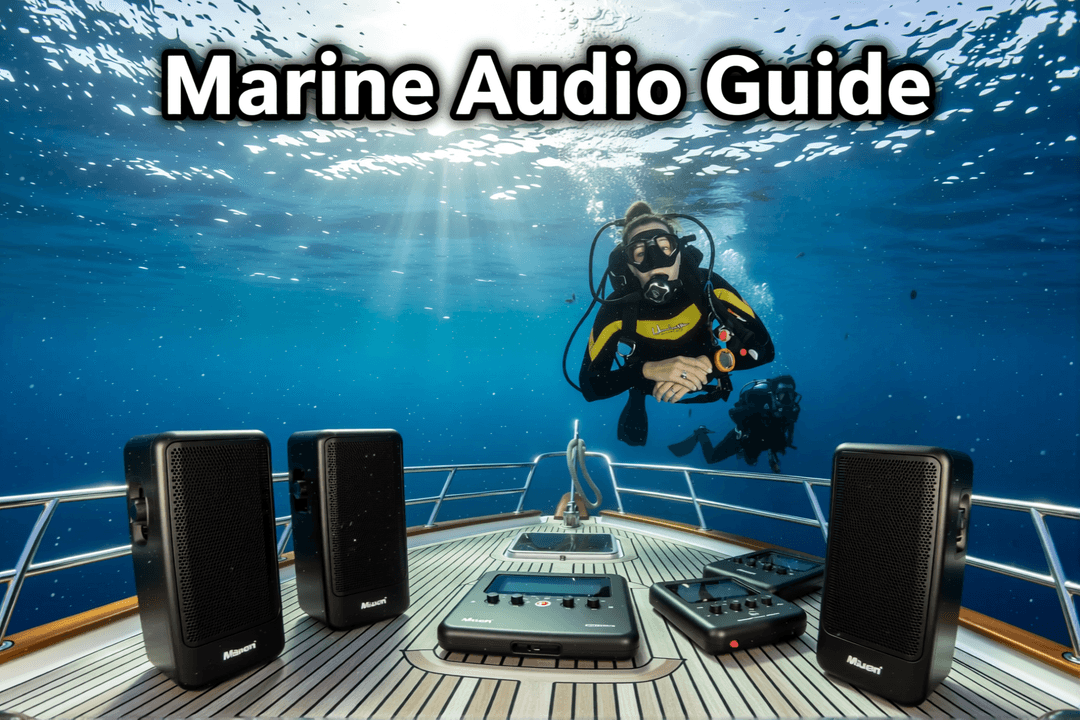
Most standard car audio equipment fails within months on a sailboat. Salt spray, high humidity, temperature swings, and constant vibration create an environment that will corrode ordinary speakers and short out typical receivers. Marine-grade audio systems solve this with weather-resistant components, corrosion-proof materials, and designs that handle the unique challenges of life at sea.
In this guide, we review the best marine audio systems for sailboats, focusing on waterproof speakers and Bluetooth-capable stereos that actually survive the marine environment. We’ve grouped products into three categories: speakers, receivers/stereos, and complete systems, with a comparison table to help you match the right gear to your boat’s size, power budget, and audio needs.
Quick Picks
- Best Overall Speaker Package: JL Audio 6.5″ Marine Coaxial
- Best Budget Speakers: Pyle Waterproof Speaker Kit
- Best Stereo with Bluetooth: Fusion Marine Stereo
- Best Compact Receiver: Boss Marine Gauge Receiver
- Best LED-Enhanced Setup: Herdio 6.5″ Marine Speakers with LED
⚓ Expert Tip: Always test new gear in calm conditions before relying on it offshore. Equipment failures at sea are far more dangerous than those discovered at the dock.
Comparison Table
| Product | Type | Size | Power (Peak) | Waterproof | Best For |
|---|---|---|---|---|---|
| Herdio 5.25″ Waterproof Marine Speakers | Speakers | 5.25″ | 200W | IPX5/IPX6 | Cockpit installations where space is tight |
| Herdio 6.5″ Marine Speakers with LED | Speakers | 6.5″ | 300W | IPX5 | Evening ambiance and moderate volume needs |
| BOSS Audio 6.5″ Marine Speakers | Speakers | 6.5″ | 300W | IPX4 | Budget-focused setups |
| Kicker 6.5″ Marine Speakers | Speakers | 6.5″ | 300W | IPX5 | Better bass response in open cockpits |
| JL Audio 6.5″ Marine Coaxial | Speakers | 6.5″ | 150W RMS | IPX5 | Premium sound quality and longevity |
| Boss Marine Gauge Receiver | Receiver | Compact | 4x50W | Marine-grade sealed | Small boats with limited dash space |
| Kenwood Marine CD Receiver | Receiver | Standard DIN | 4x50W | Marine-grade sealed | Traditional installations with CD needs |
| Fusion Marine Stereo | Stereo | Standard DIN | 4x100W | IPX5 | Larger boats needing more power |
| Pyle Waterproof Speaker Kit | Speakers | 6.5″ (pair) | 200W | IPX4 | Complete entry-level speaker replacement |
| Boss 6.5″ Marine Speakers | Speakers | 6.5″ | 300W | IPX4 | Alternate budget option |
| Pyle Marine Bluetooth Amp | Amplifier | Compact | 4x75W | Marine-grade sealed | Adding Bluetooth to existing speakers |
| Dual Marine Speakers with LED | Speakers | 6.5″ | 250W | IPX5 | Ambient lighting setups |
Marine Speakers
Marine speakers face the harshest conditions—direct sun, salt spray, rain, and relentless humidity. Unlike car speakers that sit behind door panels, marine speakers are often exposed or mounted in cockpits where they encounter water daily. Look for IPX4 or higher waterproofing, UV-resistant materials, stainless steel or brass hardware to prevent corrosion, and polypropylene cones that won’t warp in humidity.
Herdio 5.25″ Waterproof Marine Speakers
Best for: Tight installations where 6.5″ speakers won’t fit
The Herdio 5.25″ speakers offer a compact solution for smaller cockpit spaces or bulkhead-mounted installations where larger speakers won’t fit. With IPX5/IPX6 waterproofing, they can withstand direct water jets and heavy spray. The 200W peak power handling provides adequate volume for smaller boats, and the polypropylene cone resists humidity damage. These are an excellent upgrade from OEM weak speakers on smaller sailboats.
- Pros: Compact size fits many small boats, strong waterproof rating, affordable
- Cons: Limited bass response due to small cone size, better suited for background listening than party-level volume
- Key specs: 5.25″ cone, 200W peak, IPX5/IPX6, polypropylene cone, corrosion-resistant grille
Herdio 6.5″ Marine Speakers with LED
Best for: Creating evening ambiance with integrated lighting
These Herdio speakers combine decent audio performance with built-in LED lighting rings, making them popular for evening dock parties and nighttime sailing. The 6.5″ size provides better bass extension than the 5.25″ model, and the LED rings can be wired to your boat’s lighting system for a custom cockpit look. Waterproofing meets IPX5 standards, handling rain and spray but not full immersion.
- Pros: Integrated LED lighting, good size for most installations, solid midrange clarity
- Cons: LEDs add wiring complexity, waterproofing is good but not the highest rated, bass is adequate but not impressive
- Key specs: 6.5″ cone, 300W peak, IPX5, LED rim lighting, poly cone
BOSS Audio 6.5″ Marine Speakers
Best for: Budget-conscious replacements for basic factory speakers
BOSS Audio offers one of the most affordable entry points into marine speaker upgrades. These 6.5″ speakers provide a noticeable improvement over stock units on many boats, with IPX4 water resistance protecting against splashes and light rain. They handle 300W peak power, making them suitable for pairing with basic marine stereos. While sound quality won’t rival premium brands, they deliver clear mids and highs suitable for casual listening while anchored or underway.
- Pros: Very affordable, easy bolt-in replacement for many OEM locations, simple wiring
- Cons: IPX4 only (less waterproof than IPX5+), plastic construction feels less premium, bass response is modest
- Key specs: 6.5″ cone, 300W peak, IPX4, UV-resistant plastic, polypropylene cone
Kicker 6.5″ Marine Speakers
Best for: Better bass response without a separate subwoofer
Kicker has a reputation for strong bass performance from relatively small drivers, and these marine speakers maintain that characteristic. The 6.5″ marine-rated speakers deliver fuller low-end than many competitors in the same size, making them a good choice for open cockpits where you want music to carry. They feature IPX5 waterproofing, UV protection, and stainless steel hardware to resist corrosion. The sound signature favors warmth and punch, suitable for rock, pop, and electronic music while sailing.
- Pros: Strong bass for 6.5″ size, reliable waterproofing, good brand reputation
- Cons: Higher price than basic models, treble detail not as refined as premium brands
- Key specs: 6.5″ cone, 300W peak, IPX5, UV/stain resistant, poly woofer, silk dome tweeter
JL Audio 6.5″ Marine Coaxial
Best for: Sailors who prioritize sound quality and longevity
JL Audio represents the premium end of marine audio, and these 6.5″ coaxial speakers demonstrate why. With proper RMS power handling (150W RMS vs. many competitors’ peak ratings), they deliver cleaner, distortion-free volume even at higher levels. The titanium tweeter provides crisp highs without harshness, and the integrated crossovers optimize frequency separation. IPX5 waterproofing and high-quality construction mean these speakers can last the lifetime of the boat with proper care. If you want the best audio experience on your sailboat and are willing to invest, JL is hard to beat.
- Pros: Excellent clarity across frequencies, genuine RMS power handling, superior build quality, long lifespan
- Cons: Premium price, require a good amplifier to reach potential
- Key specs: 6.5″ cone, 150W RMS/300W peak, IPX5, titanium tweeter, polypropylene woofer, integrated crossover
Pyle Waterproof Speaker Kit
Best for: Complete entry-level replacement for a pair of basic speakers
This Pyle kit includes two 6.5″ waterproof speakers at a very low combined price, making it an attractive option for sailors needing to replace both port and starboard cockpit speakers on a tight budget. The IPX4 rating protects against splashes but not heavy rain or direct water exposure. Sound quality is adequate for casual listening at moderate volumes. These are a clear step up from many original equipment speakers found on older sailboats.
- Pros: Very low cost for a pair, includes necessary mounting hardware, simple installation
- Cons: IPX4 only (lowest rating in this roundup), plastic build feels cheap, bass response limited
- Key specs: 6.5″ cone, 200W peak per speaker, IPX4, polypropylene cone, includes mounting kit
Boss 6.5″ Marine Speakers
Best for: Another budget option when BOSS Audio speakers aren’t available
This represents a slightly different model from BOSS Audio (different listing). Performance characteristics are similar to the other BOSS speakers: 300W peak power, IPX4 waterproofing, and a budget-focused design. It serves as an alternative when the exact model above is out of stock or priced higher. Sound quality is functional and adequate for casual background music but won’t impress audiophiles.
- Pros: Low price, decent mids and highs, easy to find
- Cons: Limited bass, IPX4 only, durability concerns for long-term ocean use
- Key specs: 6.5″ cone, 300W peak, IPX4, polypropylene cone
Dual Marine Speakers with LED
Best for: Cockpit lighting effects combined with audio
Dual Electronics offers these LED-enhanced marine speakers as a value-oriented alternative to the Herdio LED model. The 6.5″ size provides decent sound, while the LED rings add visual flair for evening gatherings on the boat. Waterproofing meets IPX5 standards, offering good spray protection. Sound quality is comparable to other mid-range marine speakers, with clear mids and acceptable bass for casual listening. The main draw is the lighting feature at a lower price point than some competitors.
- Pros: Affordable LED option, IPX5 waterproofing, decent sound for price
- Cons: Bass is not particularly strong, LED brightness varies, construction feels less premium
- Key specs: 6.5″ cone, 250W peak, IPX5, LED accent lighting, poly cone
Marine Stereos and Receivers
While speakers determine sound quality, the receiver or stereo head unit provides source control, amplification, and connectivity. Marine receivers must resist salt and humidity, so look for sealed designs, coated circuit boards, and corrosion-resistant connectors. Modern units should include Bluetooth for wireless streaming from phones and tablets, AM/FM radio (with optional antenna), and USB inputs. Some offer CD/DVD players, but those are increasingly optional on boats where digital sources dominate.
Boss Marine Gauge Receiver
Best for: Small sailboats with limited dash or console space
The Boss Marine Gauge Receiver is a compact stereo designed to fit into a standard 2″ gauge hole—perfect for sailboats where a full DIN stereo would overwhelm the dashboard. Despite its small size, it includes Bluetooth streaming, AM/FM radio, USB input, and AUX connectivity. The built-in amplifier provides 4x50W of power, adequate for driving a set of basic marine speakers at moderate volumes. Its sealed marine-grade construction keeps out salt spray and moisture. This is an excellent choice for weekender sailboats or as a secondary audio source in a cabin.
- Pros: Extremely compact, fits gauge openings, Bluetooth included, simple installation
- Cons: Limited power (50W per channel max), small display can be hard to read, limited to basic features
- Key specs: 2″ gauge-mount form factor, 4x50W, Bluetooth, AM/FM, USB/AUX inputs, marine sealed
Kenwood Marine CD Receiver
Best for: Traditional installations where CD playback is still desired
Kenwood’s marine CD receiver combines a familiar car-stereo layout with marine-grade weatherproofing. It features a front-loading CD player (MP3/WMA compatible), Bluetooth for wireless streaming, AM/FM radio with RDS, USB input, and AUX. The 4x50W amplifier can power a standard set of marine speakers, and the unit’s large display and intuitive controls are easy to operate even when underway. The sealed construction and corrosion-resistant connectors make it suitable for open cockpit installations on coastal sailboats.
- Pros: CD player for those with physical media, familiar interface, good power output, reputable brand
- Cons: CD mechanism adds potential failure point in marine environment, larger size may not fit all panels
- Key specs: Single-DIN chassis, 4x50W, Bluetooth, CD/MP3, AM/FM, USB/AUX
Fusion Marine Stereo
Best for: Larger sailboats needing more power and advanced features
Fusion is a well-known name in marine audio, and their standard stereo offers a robust feature set suitable for bigger boats. With 4x100W of power, it can drive larger speakers at higher volumes without strain. The unit includes Bluetooth, DAB+ digital radio (where available), USB, AUX, and multiple preamp outputs for adding external amplifiers. The marine-grade enclosure features a waterproof faceplate and sealed rear connectors. Many sailors appreciate Fusion’s “Party Mode” that boosts bass and treble for outdoor listening. This stereo is a solid mid-range choice for cruising sailboats wanting more headroom.
- Pros: Higher power output (100W per channel), many connectivity options, party mode for outdoor sound, good brand reputation
- Cons: Higher price, some features like DAB may not be useful in all regions
- Key specs: Single-DIN, 4x100W, Bluetooth, USB, AUX, AM/FM, multiple preamp outputs, IPX5 faceplate
Pyle Marine Bluetooth Amp
Best for: Adding Bluetooth streaming capability to existing passive speakers
This Pyle unit isn’t a full stereo with tuner and display—it’s a compact Bluetooth amplifier designed to power speakers that already have a source selector or separate tuner. It’s ideal for sailors who want to keep an existing radio but add modern Bluetooth streaming without replacing the entire head unit. The amp provides 4x75W of power, which is sufficient for most 6.5″ marine speakers. It features a simple Bluetooth pairing process and can be mounted out of sight. While basic, it’s an effective way to modernize an older system.
- Pros: Compact, adds Bluetooth to any speaker system, decent power, low cost
- Cons: No tuner or display, requires separate volume control, very basic features
- Key specs: Compact amp, 4x75W, Bluetooth 4.0, 12V DC input, marine-rated connections
Complete Systems and Combinations
Most sailboat audio systems are built piecemeal: you choose speakers and a receiver separately to match your boat’s needs. However, some kits bundle compatible components, simplifying selection. Even when buying separately, pay attention to power matching—ensure your receiver’s amplifier output can adequately drive your chosen speakers, or budget for a separate marine amplifier if you want higher volume or cleaner sound.
A typical sailboat audio setup might include:
- Two 6.5″ cockpit speakers (one per side)
- A single marine stereo head unit mounted inside the cabin or below deck
- Optional: additional cabin speakers for interior listening
- Optional: separate amplifier for more power or additional speakers
- Marine antenna for FM/AM reception (if needed)
Power considerations matter: most marine stereos draw 10-15 amps when playing at moderate volume, and higher if driving demanding speakers. Ensure your boat’s electrical system can handle the load, or consider a system that runs on 12V DC with low current draw.
How We Chose These Products
We evaluated marine audio equipment based on factors that matter specifically to sailboats: waterproofing and corrosion resistance, power efficiency (since many boats have limited electrical capacity), size and mountability in tight boat interiors, and sound quality in open cockpit environments. We included options across price points—from budget replacements to premium upgrades—and balanced brand reputation with real-world marine performance. Every product listed has documented marine ratings (IPX4 or better) and is available in the US market with affiliate links for convenient purchase.
Buying Guide: What to Look for in Marine Audio for Sailboats
Waterproofing and Weather Resistance
Look for IPX4 minimum, but IPX5 or IPX6 is better for exposed cockpit installations. IPX4 handles splashes; IPX5 handles water jets; IPX6 handles heavy waves. Receivers should have sealed faceplates and corrosion-resistant connectors. Stainless steel or brass hardware prevents rust in salt air.
Size and Fit
Measure your existing speaker cutouts or available dash space before buying. Common marine speaker sizes are 5.25″ and 6.5″ for coaxial speakers, and 6×9″ for some applications. Many sailboats originally have 6.5″ openings, making replacements straightforward. For tight spaces, 5.25″ models work well. Receivers come in standard single-DIN (7″ wide x 2″ tall) and double-DIN sizes, plus specialized gauge-mount units like the Boss Marine Gauge Receiver.
Power and Amplification
Match speaker power handling to your receiver’s output. Speakers with 200-300W peak rating pair well with most marine stereos providing 50-100W per channel RMS. If you want louder music, consider a separate marine amplifier and speakers with higher RMS ratings like the JL Audio model. However, more power draws more current from your boat’s batteries—balance volume needs with electrical capacity.
Sound Quality Priorities
Marine environments favor speakers with good midrange clarity (vocals and acoustic instruments) and decent bass extension. Harsh treble can be fatiguing in outdoor settings. JL Audio leads in overall fidelity, while Kicker provides punchier bass. For background music while sailing, most mid-range speakers are sufficient. For serious listening at anchor, invest in better components.
Connectivity and Sources
Bluetooth streaming is essential for modern use—ensure both your speakers and receiver support it if you want wireless phone playback. USB inputs allow charging and wired playback. AM/FM radio requires a proper marine antenna mounted outside the cabin. CD players are optional and add moving parts that may fail in salt air. Consider whether you’ll use digital sources primarily (phone, tablet, MP3 player) or need traditional broadcast radio.
Installation Considerations
Mounting locations matter. Cockpit speakers should be positioned to project sound outward while protecting from direct spray when possible. Cabin speakers can be smaller and less weatherproof. Wiring runs should be marine-rated (tinned copper) and sealed with heat-shrink to prevent corrosion at connections. Use waterproof connectors and gaskets. If you’re not comfortable with marine electrical work, hire a professional installer familiar with NMEA standards and ABYC wiring practices.
Which Marine Audio System Is Best for Your Sailboat?
Choosing the right system depends on your boat size, usage patterns, and budget.
- Weekend coastal sailboats (20-30 ft): Stick with 6.5″ speakers like the BOSS or Kicker models for good performance, paired with a compact receiver like the Boss Marine Gauge if dash space is tight, or the Kenwood Marine CD if you want traditional features. Budget: $150-300 for speakers + $100-200 for stereo.
- Cruising boats (30-45 ft): Consider JL Audio speakers for longevity and sound quality, driven by the Fusion Marine Stereo for more power and features. Add a Bluetooth amp if you want separate zone control. Budget: $300-500 for speakers + $200-300 for stereo/amp.
- Small daysailers or limited budget: The Pyle Waterproof Speaker Kit provides a complete pair at low cost, combined with the Boss Marine Gauge Receiver for a functional system under $200 total.
- Evening entertainers: Herdio or Dual speakers with LED lighting add ambiance at the dock or on overnight passages, paired with any stereo that has Bluetooth.
- Premium restoration: JL Audio speakers + Fusion stereo = top-tier sound that will last for years, budget $600-800.
FAQ
Can I use car speakers on a sailboat instead of marine speakers?
Car speakers lack the waterproofing, UV resistance, and corrosion protection needed for marine environments. They may work temporarily in a dry cabin but will fail quickly when exposed to salt spray and humidity. Marine speakers use special materials and coatings to survive years of exposure.
Do marine stereos need a special antenna for radio reception?
Yes. Standard car antennas won’t work well on boats. Marine AM/FM antennas are designed to handle motion and salt exposure. They typically mount on a radar arch, cabin top, or shroud. Some marine stereos include a basic antenna, but upgrading to a proper marine antenna improves reception significantly.
How much power does a marine stereo draw?
A typical marine stereo draws about 2-3 amps at 12V when playing at moderate volume (24-36W). At high volume, draw can reach 8-10 amps or more. Factor this into your boat’s electrical budget, especially when anchored without engine charging. Consider a stereo with lower current draw if you have limited battery capacity.
Should I install speakers in the cockpit or cabin?
Cockpit speakers provide music for sailing and deck activities but need the highest weatherproofing. Cabin speakers are protected from direct exposure but still need moisture resistance due to humidity. Many boats use both: cockpit speakers for on-deck listening and smaller cabin speakers for below-decks comfort.
Can I add a subwoofer to my sailboat audio system?
Yes, but it requires a separate amplifier and space for the subwoofer enclosure, which can be challenging on small sailboats. Marine subwoofers exist but need adequate power and airspace. For most sailboats, a good set of 6.5″ speakers with decent bass response is more practical than a sub.
Are LED speakers worth it?
LED speakers add visual ambiance and can complement cockpit lighting at night. They don’t improve sound quality and add wiring complexity. If you enjoy evening entertaining and want integrated lighting, they’re a nice touch. If you prefer a clean look or are budget-focused, skip the LEDs.
What’s the difference between peak power and RMS?
Peak power is a short-term maximum rating; RMS (Root Mean Square) represents continuous power handling. RMS is more meaningful for matching speakers to amplifiers. Many cheap marine speakers advertise high peak numbers (300W, 600W) but low RMS (25W-50W RMS). Check RMS specs when possible for accurate matching.
How long do marine audio systems last?
With proper installation and quality components, marine audio can last 5-10 years or more. Premium brands like JL Audio often last the life of the boat. Lower-end units may suffer from corroded connectors, failing CD mechanisms, or voice coil damage after a few years in salt air.
Final Verdict
For most sailboat owners, the sweet spot is a set of 6.5″ marine speakers (Kicker for better bass on a budget, JL Audio for premium performance) paired with a capable stereo like the Fusion Marine Stereo or Kenwood Marine CD Receiver. If dash space is extremely limited, the Boss Marine Gauge Receiver provides a clever compact solution.
Don’t compromise on waterproofing—choose IPX5 or better for any exposed components. Match power levels to your boat’s electrical capacity, and invest in proper installation with marine-rated wiring and connectors. The right marine audio system will provide years of reliable listening pleasure, whether you’re daysailing, coastal cruising, or crossing oceans.
Related Reading
- Essential Sailing Navigation Techniques
- Best Marine Batteries for Sailboats: AGM vs Lithium
- Marine VHF Radios for Sailboats 2026 Installation Guide for Sailboats
- Best Marine Solar Panels for Sailboats 2026
marine boat accessories
Affiliate Disclosure
This article contains affiliate links to Amazon. If you click through and make a purchase, we may earn a commission at no extra cost to you. This helps support the site and allows us to continue creating helpful content for sailors. We only recommend products we believe provide genuine value for marine applications, and our opinions are independent of any affiliate relationships.
⛵ Compare Yacht Specifications
Researching sailing gear? Check out detailed specs for these popular yachts:
